
ProjectChat 2026 Speakers
ProjectChat 2026 Masterclasses
Masterclass 1 - 12 Principles for Assurance of A.I. Enabled Systems
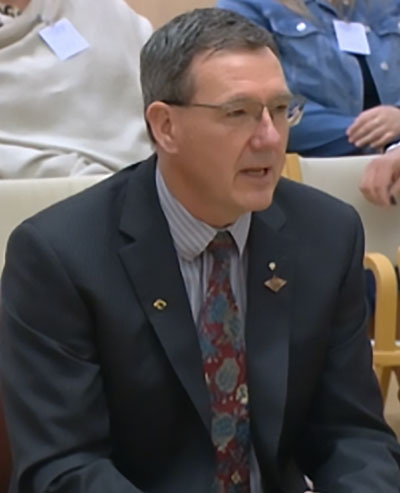
Dr. Keith Joiner - Senior Lecturer Test, Evaluation & Aircraft Systems ADFA
Masterclass Abstract
About this Speaker
Dr Keith Joiner, CSC, PhD, MSc, MMgmt, BEng, CPPD, CPEng, F.ITEA.
Dr Keith is the current Chief Editor of the Journal of Testing and a Fellow and Board Member for the International Test and Evaluation Association. Dr Joiner was an Air Force aeronautical engineer, project manager, and teacher for 30 years, culminating in his last four years as Australia’s all-domain Director General of Test and Evaluation. He has led trials on satellites, ships, land vehicles, missiles, drones, aircraft, helicopters, artillery, soldier protection, ammunition storage, base security, rifles, ICT, counter-IED, counter-CBRNE, and subsea capabilities. He was awarded a U.S. Meritorious Service Medal, an Australian Conspicuous Service Cross, and was commended twice by Service Chiefs. In the last decade at the University of New South Wales, he has authored over 120 peer-reviewed articles and graduated nine doctoral students. His research and teaching of efficient test design, aircraft design, governance of capabilities, and assurance processes for AI-enabled and cyber-resilient systems.

Masterclass 2 - Price Estimation & Cost Forecasting Ecosystem using ProPricer Technology
Keith Nordin & Nik Slepushkin - Deltek ProPricer US
Masterclass Abstract
Accurate pricing and reliable cost forecasting are critical to winning competitive bids and delivering profitable programs that includes complex, compliance-driven environments. This interactive session explores how organizations build a connected price estimation and cost forecasting ecosystem using ProPricer technology to improve confidence, consistency, and decision-making across the proposal lifecycle that meet rigorous regulatory requirements.
Designed for both new and experienced practitioners, the session will walk through practical pricing concepts, real-world use cases, and how ProPricer integrates people, process, and data to support defensible estimates, scenario modeling, and long-term cost visibility. Attendees will leave with a clearer understanding of how modern estimation and forecasting practices reduce risk, support growth, and scale across teams and programs.
No prior ProPricer experience is required.
About these Speakers
Nik Slepushkin:
Nikolai Slepushkin is an accomplished product leader with nearly two decades of experience driving innovation in enterprise software solutions for government contractors. As Director of Product Management at Deltek, Nikolai oversees strategy and execution for Deltek + ProPricer, delivering tools that streamline pricing and compliance for complex projects.
Prior to joining Deltek, Nikolai held leadership roles at ProPricer, where he spearheaded product development and customer engagement initiatives. He brings a strong background in agile methodologies, market research, and go-to-market strategy, supported by an MBA from Western Governors University and a BBA from Strayer University.
Keith Nordin:
Keith Nordin is a seasoned sales leader with more than two decades of experience building and scaling high-performing sales organizations, including in the government contracting (GovCon) technology space. He spent many years at ProPricer helping grow the business into a market-leading pricing and proposal solution for federal contractors, playing a key role in its evolution and eventual acquisition by Deltek. Today at Deltek, Keith focuses on developing sales teams, leading all Specialty Sales, including ProPricer, improving execution, and driving predictable growth across complex, enterprise GovCon environments. He brings a practical, field-tested perspective on leadership, pipeline discipline, and selling into compliance-driven markets.

Masterclass 3 - Unlocking and Maximising the Value of the Integrated Baseline Review (IBR)
Meri Duncanson & Brad Richardson - Scope Works
Masterclass Abstract
Delivering substantial complex defence programs that meet the desired capability, on time and within budget is critical to maintaining Australia’s strategic advantage.
The Integrated Baseline Review (IBR) is a proven mechanism for both Defence and Industry to validate the Performance Measurement Baseline (PMB), ensuring that scope, schedule, cost, and risk are fully integrated and achievable.
This masterclass will demonstrate and explore how IBRs enhance Australian Defence capability by improving transparency, accountability, and confidence in project planning and execution.
Attendees will gain insights into:
- The Core Purpose of an IBR:Establishing a realistic, executable baseline for defence programs, with or without an formal EVM requirement
- Driving Value for Defence:How IBRs support compliance with Earned Value Management (EVM) and Defence project governance frameworks.
- Driving Success for Industry: How the IBR can support the validation of the planning and execution plans, enabling better workforce planning and decision making
- Risk Identification and Mitigation: Leveraging IBRs to proactively manage risks in complex acquisition and sustainment projects.
- Lessons Learned from both Defence and Industry perspectives: Practical strategies to avoid pitfalls and accelerate success.
By the end of the class, participants will understand how an effective IBR process strengthens both Defence and Industry’s ability to deliver capability on time, within budget, and with reduced risk, ultimately supporting Australia’s national objectives.
About these Speakers
Brad has more than 30 years’ experience in senior leadership, program and project management, PMO and project controls, primarily within the Australian Defence sector. He has worked across Defence primes and directly with CASG and the LAND, SEA, AIR and JOINT domains, supporting the delivery of large, complex programs. Brad specialises in PMO design and uplift, planning and scheduling, Earned Value Management, project controls and independent assurance, including Integrated Baseline Reviews for ASDEFCON and AS4817 compliant Defence projects. He is the Founder and Managing Director of Scope Works, a national consultancy providing experienced practitioners across the full project and program lifecycle.
Meri has more than 27 years’ experience in program controls, PMO and governance, and currently works in the defence consulting sector. She has led the development and implementation of project management frameworks, governance systems and scalable PMOs across not for profit and government owned organisations, with a career spanning Defence, Aerospace and Telecommunications in both consulting and in-house roles. Meri specialises in improving program performance through effective PMO, governance, EVM, scheduling, risk and project controls, and is certified in Integrated Program Performance Management.

Masterclass 4 - Project Management Capability & Maturity: A Gamified Simulation
Kestrel Stone - CEO of Elemental Projects
Masterclass Abstract
Elemental Projects presents Mencken Madness, an immersive gamified simulation that brings project management capability uplift to life through team-based experiential learning. Inspired by the hit series Mad Men, the simulation is set in the glamorous world of the 1960s New York advertising sector, where participants compete as rival advertising agencies to secure the coveted Mencken Account.
During the simulation, participants move through a full project lifecycle, producing key project management documents to progress through phase gates, negotiating with demanding stakeholders, navigating shifting priorities and ultimately presenting a winning pitch to their prospective client, Miss Mencken. The blend of humour, pressure, interpersonal complexity and strategic decision making creates an environment that mirrors real-world project dynamics while remaining engaging and irresistibly fun.
This masterclass demonstrates why gamified simulations are a powerful tool for capability uplift. They enable learners to practise technical, behavioural and leadership skills in real time; strengthen team cohesion; highlight cultural traits and behaviours that support or hinder delivery; and create shared language and alignment within and across project teams. Mencken Madness reveals insights into how teams respond to uncertainty and unexpected issues, how leadership behaviours influence outcomes and how project management capability can be developed in ways that are memorable, practical and immediately transferable to real projects.
About this Speaker
Kestrel Stone is the CEO of Elemental Projects, a multi-award-winning training and consulting firm specialising in project, program, portfolio and PMO capability uplift. She has extensive experience designing and delivering high impact learning programs for government and industry, with particular expertise in experiential and gamified learning. Kestrel is known for translating complex project management concepts into accessible, engaging experiences that build confidence, competence and organisational alignment. She is an Industry Partner of the John Grill Institute for Project Leadership at the University of Sydney, where she lectured in the Master of Project & Program Management for several years, a Board Member of the Global Alliance for the Project Professions (GAPPS) and Fellow of the International Project Management Association (IPMA Australia).
ProjectChat 2026 Keynote Speakers
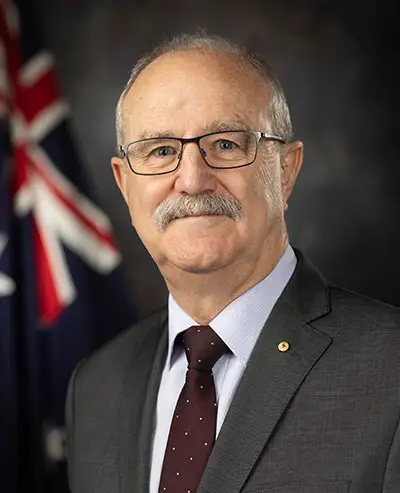
Chris Deeble, AO CSC
Deputy Secretary of CASG
Department of Defence
Topic: Complex Capability Delivery in Complex Times
About this Speaker
Chris Deeble is the Deputy Secretary of the Capability Acquisition and Sustainment Group (CASG) in the Department of Defence.
Chris has extensive experience spanning the defence, industry and commercial sectors and working with Government. He also served for 37 years in the Australian Defence Force, most notably as an Air Vice-Marshal.
His most recent appointment was Chief Executive at Northrop Grumman Australia. Prior to that he worked for Airservices Australia as the program executive for OneSKY, responsible for delivering the Civil Military Air Traffic Management System for Australia.
Chris returns to CASG after previously holding the role of Senior Program Manager where he managed more than $25 billion of complex acquisition and sustainment programs including the Joint Strike Fighter, Wedgetail Airborne Early Warning and Control, Multi Role Tanker Transport and Collins Class Submarine.
Chris has a bachelor’s degree in mathematics from the University of Sydney. He was awarded the Conspicuous Service Cross (CSC) in 2007, and recognized in 2016 as an Officer of the Order of Australia (AO).
Chris is married to Donna and they have five adult children. They enjoy travel, movies and spending time with family.
Presentation Abstract
Australia faces a strategic environment that is changing rapidly. Defence must transition from a balanced and joint force, to an integrated and focused force as we respond to rapid military modernisation across our region and the loss of the traditional 10-year warning time.
To meet this strategic challenge, Defence is changing how we deliver capability, introducing the concept of Minimum Viable Capability. We are delivering larger, more complex programs and projects than ever before and we are doing it in a more agile way.
Dr. Keith Joiner, Group Captain (Ret'd)
Senior Lecturer Test, Evaluation & Aircraft Systems
ADFA
Topic: Why New A.I. Principles are Needed with Brief Overview
About this Speaker
Dr Keith Joiner, CSC, PhD, MSc, MMgmt, BEng, CPPD, CPEng, F.ITEA. Dr Keith is the current Chief Editor of the Journal of Testing and a Fellow and Board Member for the International Test and Evaluation Association. Dr Joiner was an Air Force aeronautical engineer, project manager, and teacher for 30 years, culminating in his last four years as Australia’s all-domain Director General of Test and Evaluation. He has led trials on satellites, ships, land vehicles, missiles, drones, aircraft, helicopters, artillery, soldier protection, ammunition storage, base security, rifles, ICT, counter-IED, counter-CBRNE, and subsea capabilities. He was awarded a U.S. Meritorious Service Medal, an Australian Conspicuous Service Cross, and was commended twice by Service Chiefs. In the last decade at the University of New South Wales, he has authored over 120 peer-reviewed articles and graduated nine doctoral students. His research and teaching of efficient test design, aircraft design, governance of capabilities, and assurance processes for AI-enabled and cyber-resilient systems.
Presentation Abstract
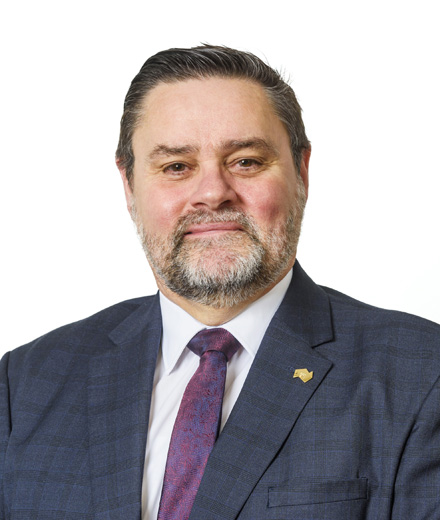
Ian Spencer
Executive Director - Defence and Industry
Defence SA
Topic: Project Management in South Australia’s Defence and Space Sectors
About this Speaker
With nearly four decades of experience across Defence, electronic warfare and space, Ian has served in leadership roles spanning government, industry and the not-for-profit sector.
Ian served in the Royal Australian Navy for over 22 years as a sailor and engineering officer. Serving in various sea going and shore-based postings across a wide range of roles, from boarding operations at sea, conducting legal prosecutions and being an engineer on Naval helicopters. Following his service, he continued supporting Defence as the senior Navy electronic warfare systems engineer in the Australian Public Service.
In 2015, he transitioned to the private sector, consulting to Defence before founding a leading-edge defence technology company in 2019, employing local engineers to develop technology for the Australian Defence Force and our allies.
Ian has worked in numerous complex Defence acquisition programs including the F-35 Joint Strike Fighter capability, MH-60R Anti-Submarine Warfare helicopter and the joint electronic warfare sub program.
As Executive Director Defence and Industry for Defence SA, he leads initiatives to grow South Australia’s defence and space sectors whilst strengthening relationships across government, industry and academia.
Presentation Abstract
South Australia’s emergence as a national hub for Defence capability, space innovation, and advanced manufacturing is reshaping the landscape for project professionals across the country. This keynote will explore how world‑class project management is underpinning the state’s most ambitious Defence and space programs, strengthening alignment between state and federal priorities, and building a workforce ready to meet Australia’s strategic needs. It will highlight the leadership role South Australia continues to play in developing future‑ready talent, including new pathways being created with educational institutions to inspire and equip the next generation of Defence project professionals.
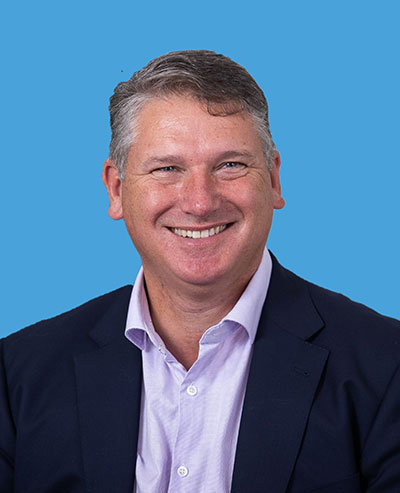
Peter Sexton
Transformation/Reform Program Leader - NRI Australia & New Zealand
Topic: It is Possible to Deliver Large Complex Programs using Agile Development?
About this Speaker
Peter Sexton is the General Manager of NRI Australia’s Transformation Management Consulting group and has more than 20 years’ experience in professional services focusing on project, program and portfolio management.
Peter has extensive experience in management consulting and brings strong leadership experience to effectively manage the complexities of delivering strategic change and transformation programs and building team capabilities. He enjoys tackling new challenges and helping develop strategy and deliver results through working collaboratively with people at all levels to navigate complex programs.
Prior to his consulting career, Peter had a range of experience in management roles within Ford Australia, General Dynamics International based at Cathay Pacific in Hong Kong, Morgan & Banks HR and Recruitment Consulting and the Royal Australian Air Force.
Peter holds a Masters in Project Management and Bachelor of Engineering from the University of Adelaide and a Masters of Business Administration from the University of Southern Queensland along with completing range of industry certifications including Prince2, MSP, MoP, PMP and ScrumMaster. Peter is also a Fellow of the International Project Management Association.
Outside of work, Peter is a keen golfer and average cricketer who enjoys cooking and supporting Port Adelaide in the AFL and Liverpool in the EPL. Peter has a wonderful family (wife Nicole and three adult children.
Presentation Abstract
As capability programs become increasingly complex and involve evolutionary technologies, we are witnessing an unrelenting requirement for agility in delivery. Agility that requires us to accept that we cannot know or accurately predict where the solution development will take us.
In doing so, agility raises a spectre of critical programs out of control, estimation efforts being considered superfluous or redundant and budgets that bear no resemblance to the required reality.
The purpose of this presentation is to examine the challenges involved delivery capability programs using agile approaches and look at ways to capture that benefits of enabling more Agile approaches without abandoning the governance demands and processes that underpin the wider organisational planning necessary for achieving successful strategic outcomes.
We will explore how agile delivery approaches offer an advantageous pathway to deliver complex capability programs, the challenges associated with these approaches and an approach to blend Agile methods without abandoning necessary enterprise aligned governance that offers the potential benefits of achieving improved cost, schedule, and technical performance outcomes.
The perspectives are based on real life experiences shared with the authors from across a range of industries and lessons learned from those who have sought to enhance the success of delivery of new digital and business capabilities.

Drew Nugent
Director - Master Planning and Estimation
Saab Australia
Topic: Predictable Velocity: Increasing Certainty in Software Projects
About this Speaker
Drew is an executive leader with over 25 years of experience in the defence industry across both Australia and the United Kingdom. He has held technical, management, and strategic leadership roles ranging across Shipbuilding, System Design, Combat Systems, Maritime Sustainment, and Aerospace.
Drew has significant experience in complex project planning and controls, PMO establishment, schedule risk analysis, and change management. His skills range from devising schedule development strategies through to fully integrated project controls solutions.
Prior to taking up his current role as a Program Director at Saab, Drew has led large multi-national program teams, PMOs, and project planning and controls organisations responsible for developing and maintaining the highly complex program delivery models.
Drew resides in Adelaide and is passionate about defence program delivery and seeing the defence industry learn lessons from success and failure to improve productivity, cost effectiveness and on-time delivery.
Drew’s Experience Includes
- Complex Program Management
- Establishing schedule frameworks for high complexity program schedules
- Leading the development of complex program schedules for major programs of work
- Assessing maturity and quality of schedule, project control, change control, and risk analysis models, processes, and deliverables
- Schedule dependency and integration reviews and improvement actions
- Preparation for internal and external audits including Earned Value System Reviews and Integrated Baseline Reviews
- Schedule Risk Analysis network development, analysis, and iteration
- Risk and Complexity Management
Presentation Abstract
In complex software development, treating velocity as a dial you can simply turn up is a recipe for missed deadlines, disengagement and burned-out teams. Erratic sprint velocities are rarely a symptom of poor work ethic; they are the mathematical result of poor visibility, unplanned work, and overly optimistic belief in ability to ‘surge’. To create predictable velocity, and unlock more stability in planning, we need to encourage our project leaders to stop obsessing over subjective capacity estimates and start managing the physics of flow, and using the data
Drew will draw on his complex program experience and contemporary academic work to create a discussion on how we turn the dial on generating more reliable velocity and more effectively use historical throughput to predict future delivery with improved statistical confidence.
ProjectChat 2026 Event Speakers
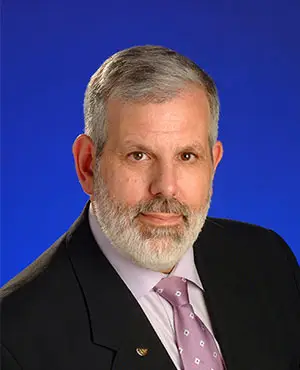
Patrick Weaver
Director - Mosaic Project Services
Presentation: AI is not intelligent, but it can be useful.
Knowledge Hub: Beyond the Baseline – Unleashing Success with Earned Value Management
About this Speaker
Patrick Weaver, PMP, PMI-SP, FCIOB, is the Managing Director of Mosaic Project Services Pty Ltd, an Australian project management consultancy business specialising in project control systems and administration. He is a Fellow of the Chartered Institute of Building (FCIOB), and a member of the PMI.
Patrick has over forty-five years’ experience in the Project Management industry. His career originally focused on the planning and managing of construction, engineering, and infrastructure projects initially in the UK and then Australia. The last twenty-five years has seen his businesses and experience expand to include the successful delivery of project scheduling services and PMOs in a range of government, ICT and business environments; with a strong focus on project management training during the last decade. His consultancy work encompasses: developing and advising on project schedules, managing the development of internal project control systems for client organisations, and assisting with dispute resolution and claims management.
He is currently working to implement an AI support system to enhance access to a client’s triple ISO certified management system documentation and relevant legislation, codes and guides needed for the performance of the client’s work in a highly regulated environment.
Presentation Abstract
While there are a few highly specialized AI tools built around neural-networks that display attributes of intelligence, most currently available tools are built on LLM. The strength of the LLM approach is its ability to engage conversationally with a user, and its ability to elegantly find and combine information from diverse sources into a straightforward statement or diagram. The problem is this process is built around understanding and matching patterns in the source materials (as a starting point this means the whole of the WWW). The basic tools have little or no ability to understand the meaning of words or apply intelligence to eliminate wrong information. To a LLM, one piece of written or diagrammatic information is as good as another, what matters is matching patterns and how often the information is repeated in the LLM’s training materials and reference sources.
This interactive workshop will look at presenters’ journey to build a custom AI system, using ChatGPT, based specifically on the documentation set used by the client organization. Along the way, the strengths, and weaknesses of the LLM concept will be discussed and the solutions implemented to overcome the challenges of hallucinations and incorrect training information will be outlined. The solution can be adapted to meet many project organization needs including making ‘lessons learned’ easily accessible and supporting estimating and risk assessment functions.
Attendees are invited to bring their experiences and solutions to the discussion.
Knowledge Hub Abstract
Reporting is not Controlling. In far too many projects the concept of project controls has shifted from being a control function focused on changing future outcomes to a reporting function focused on accurately reporting the past in great detail. These sessions will look at reframing the project controls process to provide management with useful information.
The concept of MVP has wide application!
- A robust tool to identify the current situation, trends and importantly, highlight problems and opportunities in a timely way. The information is needed within a few days of the end of a reporting period to allow management actions to be planned and implemented.
- A flexible tool to help plan and optimize future work to make the best use of the available resources, lock in opportunities and mitigate issues.
- A set of precise tools to monitor and record actual details of project performance and expenditure to support good governance and audit requirements.
These three functions are mutually exclusive and cannot be run through the same project management tool without seriously compromising one or more of the three requirements above.
The first session will look at:
- Defining the needs outlined above in more detail.
- The current ‘state-of-play’ including planned and actual updates to the core EVM standards.
- Accepting risk and uncertainty – no one can accurately predict the future.
- Why managing to deliver on-time is more important than on-budget, time is money!
The second session will look at:
- Outlining a controls system that works.
- Shifting EVM towards providing robust information early, including accepting uncertainty.
- Using AI to enhance management information.
- A brief overview of forward planning options from CPM through lean to agile.
- Dealing with the essential governance, audit, and contractual requirements – we still need the project accountants.
We have the tools – this two-part session is focused on adjusting the way they are used to deliver better management and control information when needed. Baselining the right information at the right level of detail is only the start.

Peter La Franchi, Amy Taumoefolau, & Travis Harvey
TBH
Topic: A new model for a shared lessons learned system for the future Defence Delivery Agency and Defence Industry
About these Speakers
Peter La Franchi is a seasoned defence industry executive with over three decades of experience spanning government, journalism, and industry leadership roles. His career began in 1990 during a pivotal moment in global security when, as a ministerial advisor to Defence Minister Senator Robert Ray, he gained firsthand experience of the Australian Defence Forces mobilising to fight in the First Gulf War. He was directly involved in the development of the Defence Policy for Industry statement of 1991, better known as the Price Report.
Building on this early policy experience, Peter served in the inaugural Australian Defence Exports Program, where as a commissioned officer in the RAAF Special Reserve he helped exploration of strategic industry relationships between Australia and Southeast Asia. This was followed by an influential period in journalism, during which he emerged as a leading voice in defence and aerospace reporting. As Senior Editor at Flight International magazine in London, he established himself as an authority on military aerospace and uncrewed systems technology.
Transitioning into the defence industry from 2008, Peter worked with multiple defence and aerospace companies including AeroVironment, Insitu, Cyber Technology and Robonic. He joined MDA Corporation of Canada in 2015 as Director of Strategic Sales and was directly involved in the capture and management of key capability projects across three continents, including the final stages of RAAF’s Project Nankeen and the development of the Australian Geospatial Intelligence Organisation’s DEF799 Phase 1 commercial satellite imaging ground station capability.
Peter joined Boeing Defence Australia in 2018 as its inaugural Head of Industry Engagement, followed by three years at Airbus Australia Pacific as Senior Manager Strategy and Business Development. Between 2021 and 2025 Peter was the Executive General Manager for Future Business at Nova Systems, charged with supporting strategic planning, business development and capture associated with that company’s long range business plan.
Peter joined TBH in May 2025 as National Defence Director. In this role he is leveraging advanced project controls and strategy expertise to enable new capability outcomes for Defence and defence industry. His practice area specialisations include strategic advisory for pre-Gate Zero acquisition and sustainment planning, Australian Industry Capability planning, industry structural reform enabled by project controls, and lessons learned.
Peter is married to Michelle, a fellow defence sector business professional, and they have two adult daughters living in Brisbane.
Amy Taumoefolau is a strategic leader, who has successfully led teams of 140+ people and brings extensive experience in Project, Program, and Portfolio Management (P3M) and delivery, as well as Project Controls, across both public and private sectors. She excels in delivering outcomes in complex environments, applying innovative and tailored solutions to drive sustainable business results.
Amy has significant experience in the design and implementation of Project Management Offices (both delivery and governance PMOs) and in providing strategic advice regarding specialised delivery solutions. She is highly skilled in deploying project controls systems, with a strong emphasis on scheduling and planning, particularly within the Defence sector. Her skills include developing fully resourced integrated master schedules, inclusive of complete industry partner dependent schedules, as well as the incorporation of cost and risk data, accompanied with robust systems for reporting, and dependency and baseline management.
Her Defence sector portfolio spans a wide range of complex and high-value programs, including major surface ship projects with individual budgets reaching $64 billion dollars. She has also delivered capability across maritime ICT networks, active phased array radar systems, guided weapons and explosive ordnance, integrated maritime warfare systems, and joint systems projects.
Travis Harvey has over 17 years’ international experience in Portfolio, Program and Project management. He has worked in Australia and internationally in the public, private and non-profit sectors and is able to draw on best-practice approaches from these sectors to achieve outcomes with maximum stakeholder value. Travis possesses strong analytical and leadership skills and the ability to apply appropriate solutions to complex problems, throughout the lifecycle. His skills range from devising organisational strategies through to planning, delivery and evaluation of programs and projects. He draws on his diverse experience in complex stakeholder environments, to offer effective solutions to a broad range of clients.
Presentation Abstract
This presentation proposes a new shared lessons learned system for the future Defence Delivery Agency (DDA) and the Australian defence industry. Drawing on analysis of ANAO Major Projects Reports and international best practice, the speakers examine why current Defence lessons learned processes have struggled to prevent recurring cost, schedule, and governance issues. The session outlines a new collaborative model based on shared governance, improved data access, and a common taxonomy for analysing program outcomes. Inspired by the aviation safety industry’s “just culture” approach, the proposed framework aims to enable more open reporting, real time learning, and stronger decision making across Defence capability delivery.
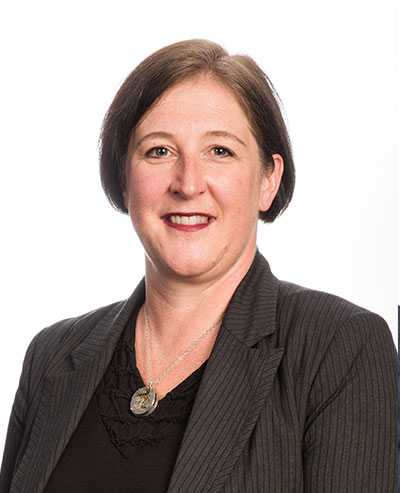
Dr Naomi Mathers
ICCPM - Director, Industry Liaison and Member Services
Topic: Managing Speed and Complexity
About this Speaker
Dr Naomi Mathers is the Director, Industry Liaison and Member Services at the International Centre for Complex Project Management (ICCPM). Naomi joined ICCPM in 2018 after more than 20 years in the space industry where she worked across government, defence, industry and academia to establish and deliver collaborative projects, build capability and grow the Australian space sector. Naomi is an experienced board member, having served on government, industry and international boards. She brings her experience in strategy development, governance, stakeholder engagement and complex project delivery to ICCPM along with a passion for improving outcomes for Australian businesses and government agencies.
Presentation Abstract
As the defence strategic environment becomes more uncertain and contested, there is an imperative to increase speed to capability. This approach is also being adopted in other high innovation sectors and commercial environments where speed to market delivers commercial returns. In response, projects and programs are implementing the delivery of minimum viable capability and adopting continuous development to mature both the capability and its support systems.
Paradoxically, this approach is both a response to complexity and a source of complexity. This presentation will explore the project complexity and the importance of systems governance and skilled complex project leaders to realise the benefits of this approach.
Key takeaways:
- The systemic challenges of increasing speed to capability.
- A framework for assessing project complexity.
- Systems governance and Complex Project Leadership (CPL)
- Some key insights from ICCPM thought leadership relevant to the topic
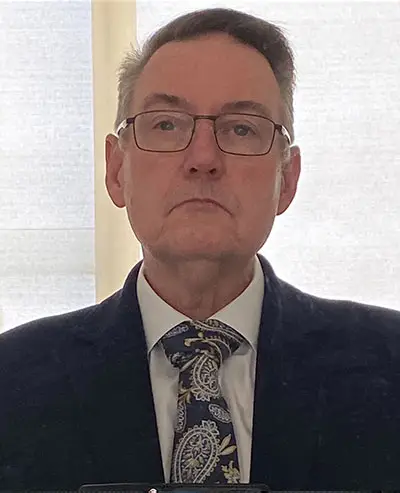
Rob McMartin
Director, Emu Head Consulting
Topic: Age of Complexity" - PMO Governance of Complex Projects
About this Speaker
Rob McMartin has over 40 years experience, as portfolio, program project and PMO Manager with expertise across a variety of programs, projects, general, facilities and contract management across a variety of projects from aviation, finance, utilities, property, events, logistics, public transport, environment, software development, defence and aerospace industries.
Rob is an AIPM Victorian Chapter Councilor and the Co-Chair of the International Centre for Complex Project Management (ICCPM), Managing Risk in Complexity (MRC), Special Interest Group (SIG).
Presentation Abstract
Throughout history, we have described periods of human achievement as “the Age of” something. We speak of the Age of Exploration, the Age of Invention, and the Modern Age. Each of these eras is defined by what humanity achieved during that time. In many respects, they could all be described as ages of curiosity.
Historians typically define the Modern Age as spanning from around 1800 to 1945. I would describe the period that followed, from 1945 to the turn of the century, as the Age of Complication. This era was characterised by the ambitious and often unprecedented projects we undertook. We took the knowledge developed during the Modern Age and applied it in entirely new ways. Diving suits were transformed into space suits, submarines inspired spacecraft, fireworks evolved into rockets, and fragile wood-and-fabric aircraft became machines capable of crossing oceans in hours. Sand, glass, copper, and plastic were combined to create the most powerful communication and data storage systems humanity has ever known.
With the arrival of the twenty-first century, I propose that we entered the Age of Complexity.
Projects today are more complex than at any point in history. Where once we built a bridge, a road, or a tunnel, we now deliver interconnected infrastructure systems monitored by sophisticated digital platforms designed to protect both assets and people. Where governments once announced a project and simply built it, we now face extensive consultation processes, environmental scrutiny, regulatory requirements, rent-seeking behaviour, pressure groups, and the amplifying effects of social media.
These factors introduce layers of complexity into every major initiative. This challenge is not limited to infrastructure. Almost any modern project can be affected by complexity, whether it is present from the outset or emerges as the project progresses. Where a nation once built a ship largely in isolation, construction today depends on a highly interconnected network of suppliers, manufacturers, partners, technologies, and systems.
In this presentation, I will explore how projects have become inherently complex, yet many organisations continue to rely on project management approaches that were designed for a far simpler world. In some cases, even the organisations delivering these complex endeavours persist in using outdated tools, systems, and methodologies to attempt projects that, not so long ago, would have been considered impossible.
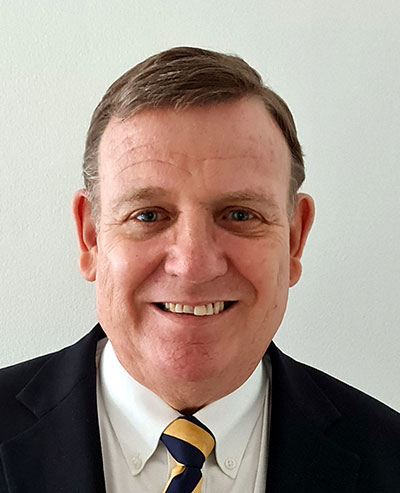
Kym Henderson
SME
Topics:
1) Update to Australian Standard AS4817 Using ISO 21508:2026 as the Basis.
2) Earned Schedule Fundamentals - Using EVM data in Units of Time rather than Cost.
About this Speaker
Kym Henderson is Convenor and Project Leader of ISO/TC 258 Working Group 12, responsible for the recently published second edition of ISO 21508 (Earned Value Management) and the current revision of ISO 21511 (Work Breakdown Structure). He also led the development of ISO 21512:2024, the international EVM implementation guidance standard. These standards codify the global consensus on EVM good practice for projects, programmes and portfolios.
He has applied EVM across projects ranging from small technology delivery projects to large Australian defence acquisition programmes. He project managed the Capability Acquisition and Sustainment Group’s Integrated Investment Portfolio Integrated Master Schedule (IIP IMS), which established the first enterprise-level integrated view of cost, schedule and workforce for the Defence Integrated Investment Portfolio (IIP). He has led or supported multiple Integrated Baseline Reviews for government and industry.
Kym published the first independent validation of Earned Schedule using real project data in 2003 and contributed to early research, including publication in CrossTalk: The Journal of Defense Software Engineering. His thought leadership contributed to the global interest and uptake of ES which is now part of the ISO published EVM standards, marking transition from research to globally codified practice.
He is Chair of Standards Australia MB-012 mirror committee to ISO TC258, Chair of the Project Governance and Controls Symposium Ltd (PGCS), a former Executive Vice President of the College of Performance Management (USA) , former core team member for the ISO EVM standard first edition and a core writing team member for the PMI Earned Value Management Practice Standard (2nd edition).
Kym is a retired member of the Australian Army Reserve (Lieutenant Colonel) and lives with his wife Deanna at Manly Beach in Sydney.
Presentation Abstracts
Update to Australian Standard AS4817 Using ISO 21508:2026 as the Basis
The second edition of ISO Earned Value Management (EVM) Standard 21508, which will be adopted with modifications as AS4817 together with ISO EVM Implementation Guidance 21512 and the forthcoming revision of ISO 21511, repositions EVM as an integrated decision-support capability for projects, programmes and portfolios.
This presentation focuses on what is new for practitioners and why it matters for improving project governance, management and controls practice, prediction confidence and delivery outcomes.
Key developments include twelve new integration clauses that connect EVM with other project, programme and portfolio management processes; the direct integration of risk into the 11-step EVM process model (Clause 5); explicit inclusion of portfolio management; and the moving Earned Schedule into the body of the standard for time-based schedule analysis using EVM data.
The presentation provides early insight into the new ISO EVM related standards framework and how this is likely to influence future practice, guidance, training and organisational adoption across global project, programme and portfolio delivery environments.
Takeaways include:
- Reframing EVM as an integrated governance, management and control system at project, programme and portfolio levels.
- Enabling evidence-based decision-making rather than rely on optimism and intuition with earlier visibility of emerging issues for proactive attention and action before delivery objectives are threatened.
- Creating performance visibility at all levels, including portfolio level where it is needed to support senior leadership strategic decisions.
- Implementing scalable and tailorable EVM across agile, hybrid and traditional delivery environments for most projects, most of the time in most organisations.
Earned Schedule Fundamentals – Using EVM data in Units of Time rather than Cost
While Earned Value Management (EVM) provides powerful indicators of project performance, its schedule metrics, Schedule Variance (SV) and Schedule Performance Index (SPI) are expressed in cost units, which limits their usefulness for analysing schedule performance.
Earned Schedule (ES) extends EVM by transforming performance data from cost units into units of time using existing EVM data.
The ES method determines when the earned value should have occurred on the performance measurement baseline schedule, enabling schedule performance and forecasting to be expressed in time units. This approach enables the direct integration of EVM performance data with network schedule analysis, bridging the long-standing gap between cost-based EVM metrics and time-based schedule management.
The presentation introduces the fundamentals of Earned Schedule and demonstrates using a case study example how ES can improve project delivery outcomes by improving schedule analysis and completion forecasting compared with traditional EVM indicators, particularly in the later stages of projects.
ES is recognised in international standards and guidance, including ISO 21508 EVM Standard (first and second editions), ISO 21512, EVM Implementation Guidance, AS 4817:2019, the PMI EVM and Scheduling Practice Standards, and the US NDIA Predictive Measures Guide.
Sanjiv Parekh
Director Program Services - KBR | Director - Zerofloat
Topic: Beyond tools and processes: The human side of transformation
About this Speaker
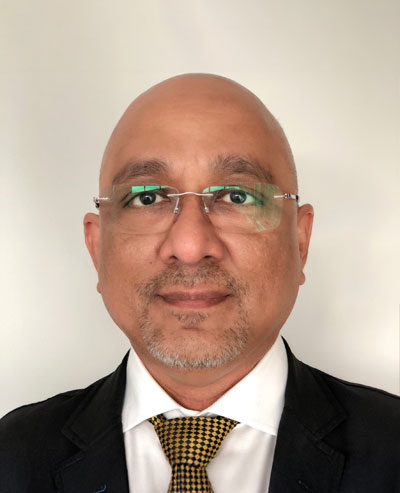
As Program Services Director at KBR and Director of Zerofloat, he leads with a hands-on, outcomes-focused approach to delivering value through integrated project controls, PMO governance, and performance assurance frameworks.
Presentation Abstract
In the race to digitise, automate, and innovate, organisations often overlook the single most critical factor in transformation success: people. Whether in public or private sectors, projects frequently fail not because of flawed technology or strategy, but because the human elements—trust, culture, and leadership—are underestimated or ignored.
This session challenges conventional thinking by shifting the lens from transformation as a technical or process challenge to transformation as a deeply human experience. Drawing from real-world examples in both government and industry, we’ll explore how emotions, biases, and unspoken fears influence decision-making, adoption, and the ultimate success of change initiatives.
We’ll also examine the contrast between public and private sectors—where government projects often face additional scrutiny, rigid governance, and risk aversion—highlighting how human-centric approaches can bridge these challenges.
Key Takeaway: Successful transformation is not about forcing people through change—it’s about creating an environment where they want to go there with you.

Simon White
Systems-driven Leader, Strategist, and Creator
Topic: Everyone’s Busy - So Why Are We Still Late?
About this Speaker
Presentation Abstract
Amid today’s constant activity, it’s easy to confuse motion with progress.
This session takes participants above the noise to examine performance from a higher vantage point — through the lens of Systems Thinking.
Using a live “3-Part Drill-Down” exercise, we’ll uncover how constraints inside multi-sovereign environments — spanning the Administrator, Capability Operator, and Contractor — silently determine the pace of delivery.
You’ll see how decision latency, requirement churn, and interface friction form self-reinforcing loops that make everyone busy but keep the system late.
More importantly, you’ll learn how to distinguish signal from noise, identify where excuses mask the real constraint, and design changes that restore flow, trust, and momentum across boundaries.
Kestrel Stone
CEO of Elemental Projects
Topic: Capability Baselining
About this Speaker
Kestrel Stone is the CEO of Elemental Projects, a multi-award-winning training and consulting firm specialising in project, program, portfolio and PMO capability uplift. She has extensive experience designing and delivering high impact learning programs for government and industry, with particular expertise in experiential and gamified learning. Kestrel is known for translating complex project management concepts into accessible, engaging experiences that build confidence, competence and organisational alignment. She is an Industry Partner of the John Grill Institute for Project Leadership at the University of Sydney, where she lectured in the Master of Project & Program Management for several years, a Board Member of the Global Alliance for the Project Professions (GAPPS) and Fellow of the International Project Management Association (IPMA Australia).
Presentation Abstract
How would you measure your organisation’s project management capability? If your first thought was a number between 1 and 5, then this session is for you. Traditional maturity models assume that capability progresses in fixed levels, like rungs on a ladder. But this creates a structural problem – you can’t get to “level 4” unless you excel at every capability defined in the model. This means that, in order to show progress, organisations end up investing in areas where a high level of maturity is unnecessary and inefficient, because for some of those capabilities they might be optimal at level 2. The result is capability uplift driven by the maturity model rather than by organisational need.
Excellence models offer an alternative approach. An excellence-based approach treats capability as a system of interconnected components – a jigsaw rather than a ladder. Instead of assuming a uniform target across all areas of capability, an excellence model enables organisations to identify which capabilities matter most for their context, baseline their current performance in those specific areas and define an optimal target that is both realistic and strategically aligned. It supports capability uplift that is targeted, nuanced and more defensible than a single number on a 5-point scale.
This session will provide insight into the work of the Global Alliance for the Project Professions (GAPPS), which is currently developing a Guiding Framework for Organisational Project Management Capability. This excellence-based framework will enable organisations to baseline their capability on a regular basis, uplift capability through targeted training and tooling, and benchmark themselves against their own historical baselines and potentially other organisations in their sector. It’s a game-changer for those who understand that capability is built piece by piece, not rung by rung.
Daniel Foster & Azahar Pathan
Skeiny Projects
Topic: Scaling Project Controls: When A.I. learns WBS thinking
About these Speakers
Daniel Foster
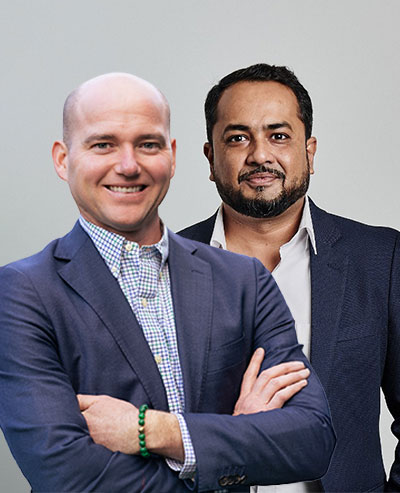
Daniel is a competent and successful project manager and project controls manager who has managed multiple engineering development projects at varying stages of delivery from design through to manufacture. He has also managed improvement, change and strategic change projects with a heavy involvement in the planning and project controls aspects of the projects that he has managed.
He has experience performing consulting roles in many industries including Defence, Rail, Construction, Oil & Gas, Aerospace and Aviation. This is combined with his public speaking engagements to deliver insights into project delivery.
As Managing Partner of Skeiny he manages and delivers consulting and support assignments to clients in these industries. This is alongside managing the team of Skeiny consultants who range from graduate to expert level in their respective project management areas.
His experience is backed up by qualifications; Certified Practicing Project Director with the Australian Institute of Project Management, Project Management Professional with Project Management Institute, Diploma of Project Management, P6 Implementation Consultant (Oracle Certified) and PRINCE2 Practitioner. He also has a first class honours in a Bachelor of Aerospace Engineering and a Masters in Aviation Management.
Azahar Pathan
A doer that thinks, a builder that asks questions, and a communicator that translates tech to value.
As a Senior Consultant at Skeiny, I bring over 15 years of expertise in data analysis, project management, business analysis and process improvement to solve complex challenges across diverse industries. Certified in Data Analytics and Project Management, I specialize in tools and frameworks such as Tableau, Power BI, SQL, Snowflake, Power Automate, BABOK and PMBOK.
My career spans delivering impactful results for Fortune 500 companies, Australian Defence and Government Agencies, Telco, and Higher Education sectors, both in Australia and globally. I’ve successfully implemented Agile, Six Sigma, and Lean methodologies to optimize workflows, enhance efficiency, and drive customer value.
As a natural leader and effective communicator, I excel in team and stakeholder engagement. I’ve collaborated with project teams across Data, Training, Quality, Sales, Planning, Resourcing, and Operations, fostering collaboration and empowerment.
My mission is to help organizations harness the power of data and project management to achieve their goals. Let’s connect and explore how we can drive success together!
Presentation Abstract
Project Bee outlines an AI-assisted, human-in-the-loop approach to early project setup, applying project management thinking to transform complex statements of work into usable WBS dictionaries.

Meri Duncanson
Defence Contractor
Topic: Cracking the Gen Z Code – Building a thriving workforce for the future
About this Speaker
Meri has more than 25 years of experience in Program Controls and PMO and Governance, currently working in the defence consulting field. Most recently, Meri has completed the development and implementation of project management frameworks, governance systems and a scalable PMO in the not-for-profit and government owned corporation domains.
Over the years, Meri has held several positions in the Defence and Aerospace, and Telecommunications sectors, both in consultative and staff roles and enjoys implementing and improving program performance management systems and processes to enhance program delivery, including PMO, Governance, EVM, Project Controls, Scheduling and Risk Management.
Meri is a certified in Integrated Program Performance Management (IPPMTM) and has served on the board of the Australian Performance Management Association and is a long term member of PMI and AACEI.
Presentation Abstract
Gen Z has officially entered the chat, and the workplace.
They’re digital natives, allergic to the telephone, and expect flexibility like they expect Wi-Fi.
So how do we keep them motivated, connected, and thriving?
This session spills the secrets to turning Gen Z quirks into workplace wins.
We’ll cover what makes them tick, what makes them ghost, and how to keep them engaged.
Walk away with practical tips that work in real life—not just on a motivational poster.
Key Outcomes
- Decode the Gen Z mindset (spoiler: it’s not just memes and iced coffee).
- Learn how to build trust without sounding like a corporate robot.
- Discover why flexibility isn’t a perk, it’s how to supercharge productivity.
- Create a culture that feels inclusive, purposeful, and maybe even fun.

Rob Edwards
Deltek US
Topic: Deltek PPM Roadmap and Strategy
About this Speaker
Rob Edwards is a Sr. Director of Product Management for PPM at Deltek. Rob also acts as liaison for regulatory compliance in the US. This involves government initiatives including DCMA DECM and DoD IPMDAR. Rob also has experience planning and scheduling in support of both programs and proposals, in A&D and Construction.
Presentation Abstract
Deltek will provide an overview of our PPM roadmap and strategy for moving from desktop to cloud. If you’re curious about our roadmap and want to understand how your feedback shapes our long-term plans, this session is perfect for you. Gain valuable insights and background information that will enhance your understanding of the exciting journey ahead!
Stacey Wehmeier
Executive Director, Synergy Group
Topic: The Architecture of High Performance in Accelerated Delivery: Aligning Capability and Culture
About this Speaker
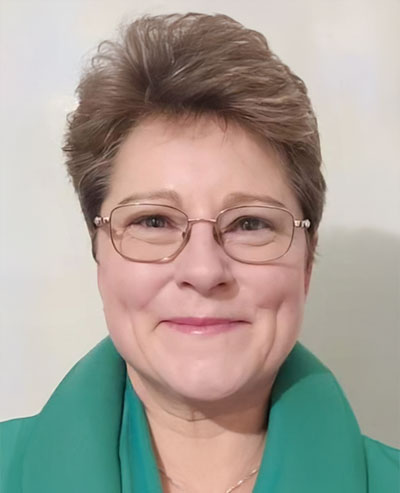
As an Executive Director with Synergy Group, I am pleased to be part of a team providing quality services to Government. I have over 26 years’ experience in the Government Defence and National Security sector. Before joining Synergy in September 2018, I led a team implementing major reform in Project Controls (Cost Estimation and Forecasting, Schedule Management, Risk Management and Workforce Planning and Estimation) for a large Government department. As a leader, I believe in being a positive advocate for my team, enabling their success in delivery, and encouraging their personal development. The work we do is very important, but the people are more important.
Presentation Abstract
True high performance emerges at the intersection of individual capability and team culture. In this session, we explore how leadership behaviours, structural clarity, and shared accountability create the foundation for accelerated growth and optimal dynamics in fast moving environments. Attendees will gain insights into how to intentionally shape team environments that unlock discretionary effort, enhance resilience, and sustain excellence over time.
Malcolm Woolley & Daniel Verwoert
BAE Systems - Head of Estimating and Pricing
Topic: Beyond Spreadsheets: Tools, Collaboration, Credibility in Defence Estimating
About these Speakers
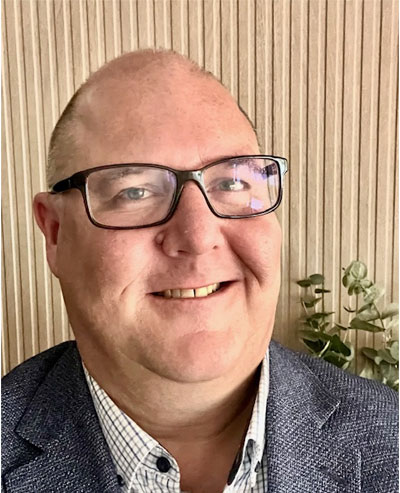
Malcolm Woolley is the Head of Estimating and Pricing for BAE Systems Australia, with extensive experience across the defence sector gained from over 25yrs with BAE Systems. He has held senior finance and operational leadership roles for the past 15years, supporting complex, regulated programs and major business transformations. Malcolm is known for building high-performing teams and delivering robust, compliant pricing and commercial outcomes that balance value for customers with sustainable returns for shareholders. He brings a practical, leadership-focused perspective to pricing, assurance, and operational decision-making
Daniel Verwoert leads a team of specialists helping make estimating simpler through data, emerging tools, and shared expertise. With more than two decades experience at BAE Systems across Engineering and Estimating & Pricing roles, he brings a practical perspective shaped by experience on complex programs and through multiple major proposals.
Presentation Abstract
As defence contractors face growing expectations for cost transparency, governance, and collaboration, traditional spreadsheet-based estimating approaches are increasingly being stretched beyond their limits. This session explores estimating capability as a strategic enabler rather than a back-office function, examining how specialised estimating toolsets support standardised, collaborative, and scalable cost and pricing models across geographically distributed teams. The presentation focuses on practical outcomes—improved traceability, reduced risk, and greater commercial credibility—helping defence organisations position themselves for success in Australia’s evolving defence landscape.
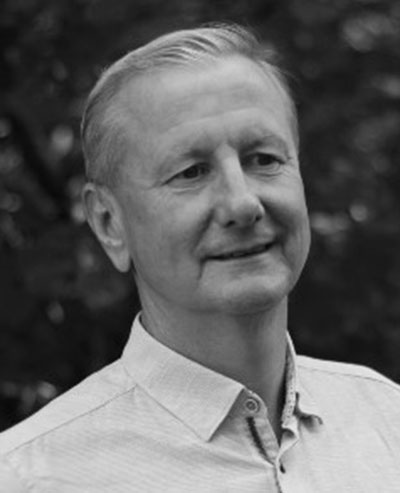
Andy Watt
Goldratt UK - Managing Director
Topic: Stop Re-Planning, Start Delivering. Creating Flow in Complex Projects.
About this Speaker
With over 35 years in operational excellence and business transformation, Andy brings hands-on industry experience, including 10 years in Senior Management roles within Aerospace and Defence. As the owner and driving force behind Goldratt UK, he has spent 25+ years consulting with Senior Leadership Teams and leading the Goldratt UK team in delivering high-quality Theory of Constraints (TOC) solutions across Production, Distribution, MRO, Supply Chain, and Project Management worldwide.
Having worked directly with Dr. Eli Goldratt, Andy brings unparalleled insight and practical expertise. He is actively contributing to the evolution of the methodology through innovations like Goldratt UK’s ‘10 Rules of Flow’ framework a practical guide inspired by Dr Efrat Goldratt-Ashlag’s work, designed to help organisations embed flow-based thinking at every level.
Andy is committed to keeping TOC relevant, modern, and accessible, ensuring it remains a powerful tool for navigating today’s complex and fast-changing business environments. Known for his ability to simplify complexity and deliver transformative results, Andy continues to be a leading voice in advancing the next generation of TOC thinking.
Presentation Abstract
The next generation of projects demands faster delivery, greater reliability, and the ability to manage increasing complexity. Meeting this challenge requires more than better tools – it requires a fundamental shift in how project teams think about planning, execution, and success.
Using the Rules of Flow – an evolution of the proven Critical Chain approach – Andy will explore how teams can move away from excessive re-planning and toward execution-focused delivery. The session emphasises the behavioural shifts required to create flow, align teams, and manage uncertainty effectively.
Grounded in 35+ years’ of experience implementing these principles in complex environments, Andy’s presentation will share case examples, common pitfalls, and practical actions that organisations can apply immediately to accelerate capability and empower project teams to deliver with confidence.
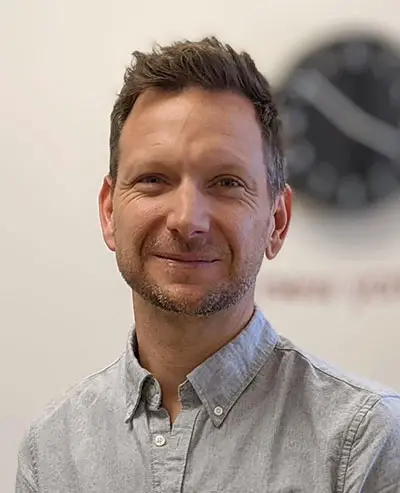
Matthew Williams
Amplify-Now - Founder
Topic: The Discipline to Stop: A mini-manifesto for outcome-driven execution.
About this Speaker
Matt is the founder of Amplify.
Matt’s career has always been at the intersection of business and technology, starting his first business at 18 providing technology advice to small businesses in his hometown of Adelaide. After university and a decade selling enterprise project management software, Matt then founded Amplify with the vision of being the leading provider of strategy execution software to large enterprises.
Matt is also a keen runner and dad joke enthusiast.
Presentation Abstract
Organisations often mistake activity for progress, creating layers of initiatives, reporting, and “nearly there” work that look productive but fail to deliver meaningful change.
A transformative approach requires leaders to build the discipline to pause, challenge assumptions, and stop work that isn’t producing measurable outcomes—shifting the culture from celebrating motion to valuing impact.
This perspective reframes pausing or cancelling an initiative as a strategic act, positioning outcome‑driven execution as a core capability for organisations seeking to break out of stagnation and deliver real, sustained results.
ProjectChat 2026
Join Australia’s most valuable and thought-provoking PM conference now!